
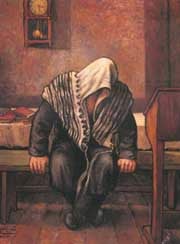
Prayer is called many things in the Torah. Jacob has an "encounter" on Mount Moriah; Pinchas conducts a "judgment" with G‑d; Isaac and Rebecca "entreat" for a child; Jonah "cries out" from the belly of the fish. The Midrash surveys the Five Books of Moses, the Book of Psalms and the Prophets, and finds 13 ways to say "prayer": cry, howl, groan, stricture, song, prostration, encounter, judgment, entreaty, standing, appeal and beseeching.
Of course, no two people cry alike. Judgment can be the judgment of self, of our place in the world, or of our relationship with G‑d. And certainly the tone and timbre of our prayers varies with the time and place of our beseeching, the reason for our entreating, and the object of our appeals. Thus each of the thirteen modes of prayer include numerous colors and textures, as we have attempted to demonstrate with this selection of 28 stories, essays and articles, culled from 125 issues of Chabad.Org Magazine.
Stories of Prayer:

|
The Chassid and the Fool at the Leiptzig Fair

|
Voices of Prayer:

|
Essays on Prayer:

|
Prayer Insights:





What I find particularly meaningful about prayer is that it is not limited to asking G-d to change our circumstances. Sometimes, prayer changes us instead. The Hebrew word lehitpalel suggests an element of self-reflection, reminding us that prayer is also an opportunity to examine our thoughts, intentions, and relationship with Hashem. We may not always receive the answers we hope for, but the act of turning to Him can give us the strength, clarity, and faith to face challenges we cannot fully understand. Perhaps one of the deepest purposes of prayer is not simply to bring our will before G-d, but to bring ourselves closer to His will.